
Context
Healthcare SaaS
1 Quarters (60 Hours)
Gap analysis and product visioning
Principal Engineer, Principal Research Scientist
Product and Engineering Leadership
Shifted product direction and grounded concepts
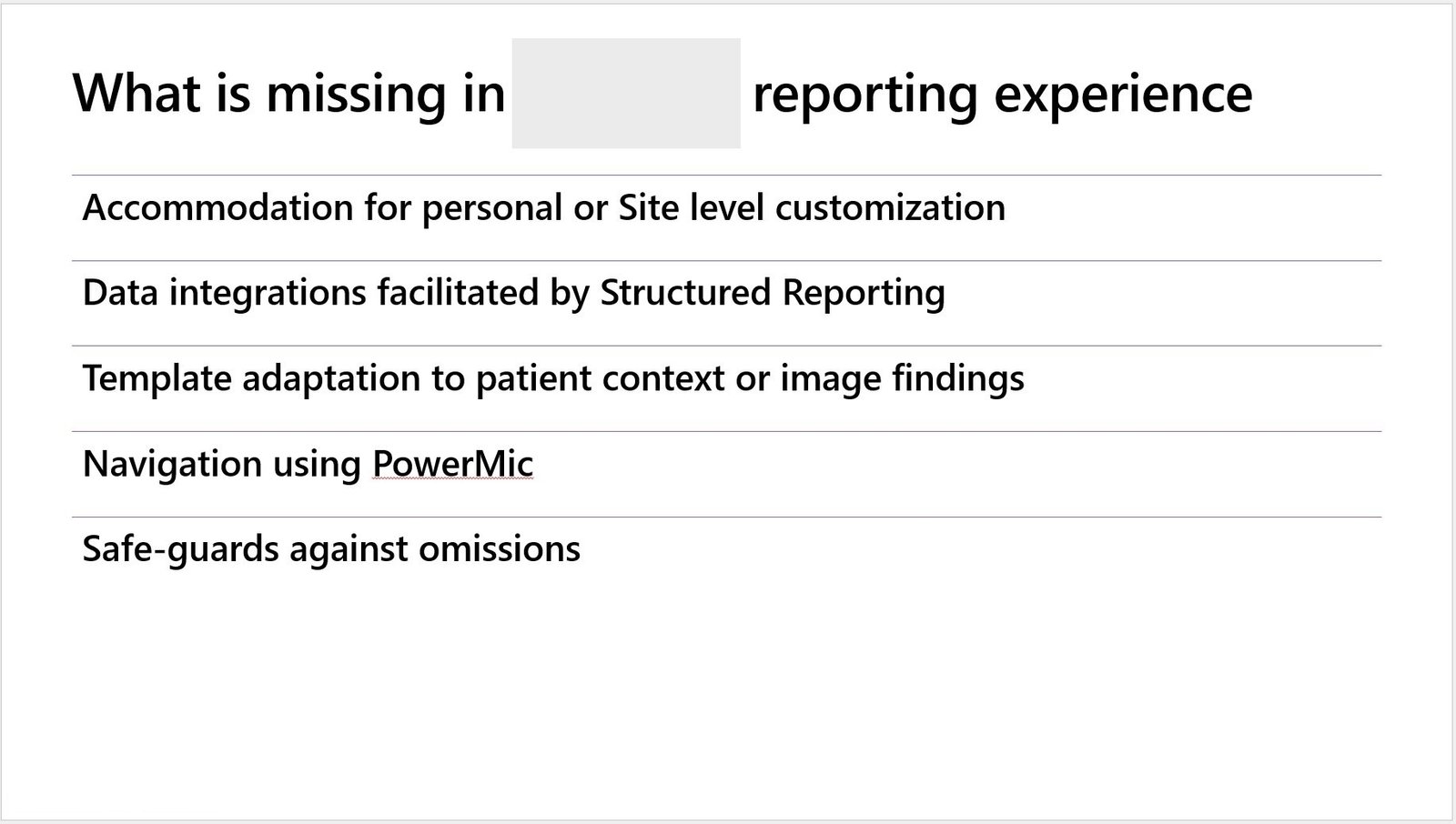
Drawing on extensive prior research with radiologists and support specialists, I conducted a rigorous side-by-side analysis of the MVP's assumptions against clinical reality. The most consequential gaps: the system assumed one static template per procedure code, in practice, radiologists dynamically layer in Macros and content based on findings as they work.
I synthesized the most salient gaps into a clear, compelling presentation that made the invisible visible. It directly shifted the team's understanding and informed their research agenda.
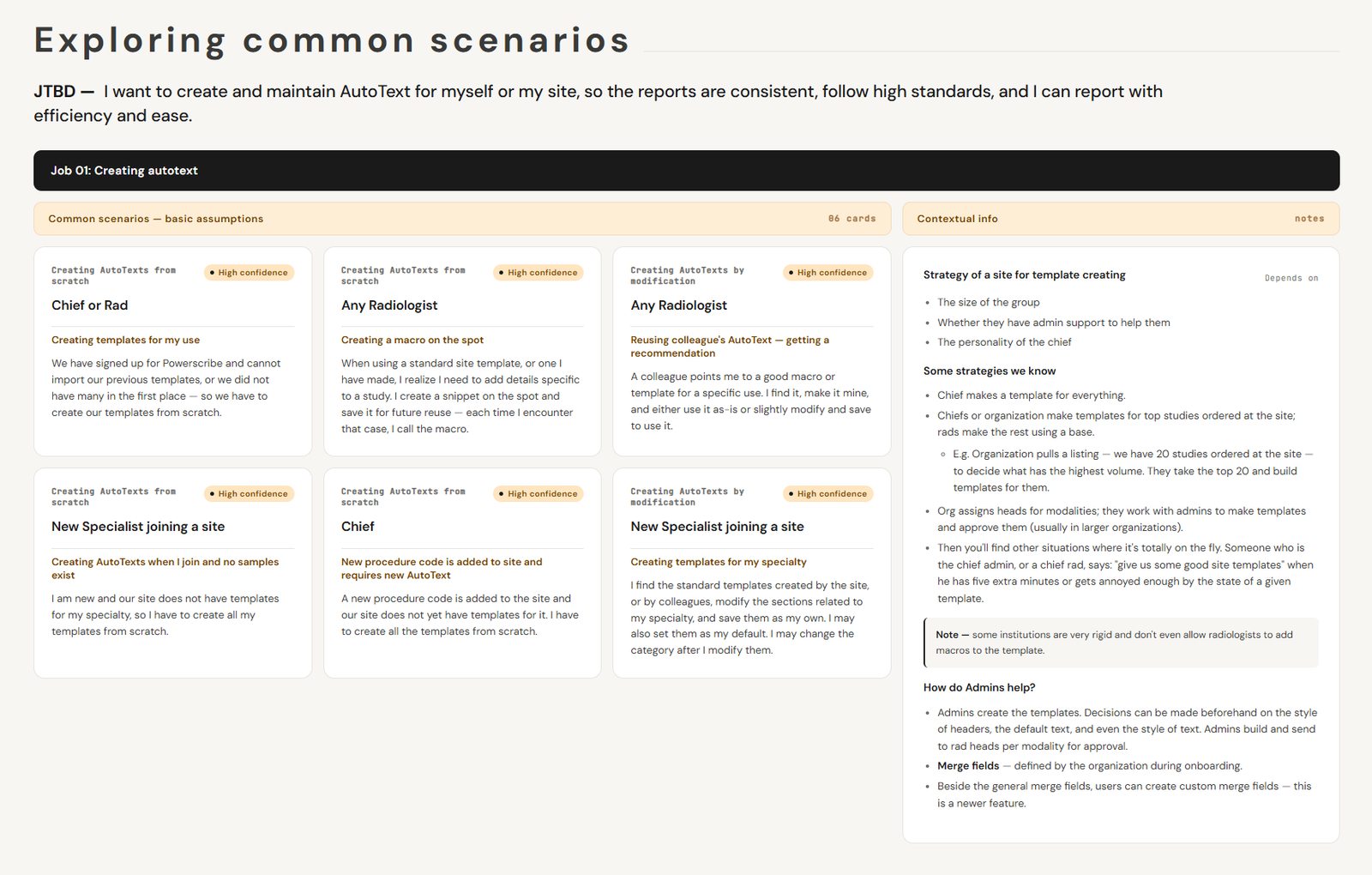
Sample Slides from final presentation to EVP of Engineering and Senior Product leadership
Beyond documenting gaps, I proposed a north star vision: instead of loading a single static template, AI could detect the nature of a study and dynamically construct the most suitable template from the organization's own building blocks, its AutoTexts, Macros, and institutional fragments.
This work was in close collaboration with the Principal Engineer to ensure feasibility from the start.
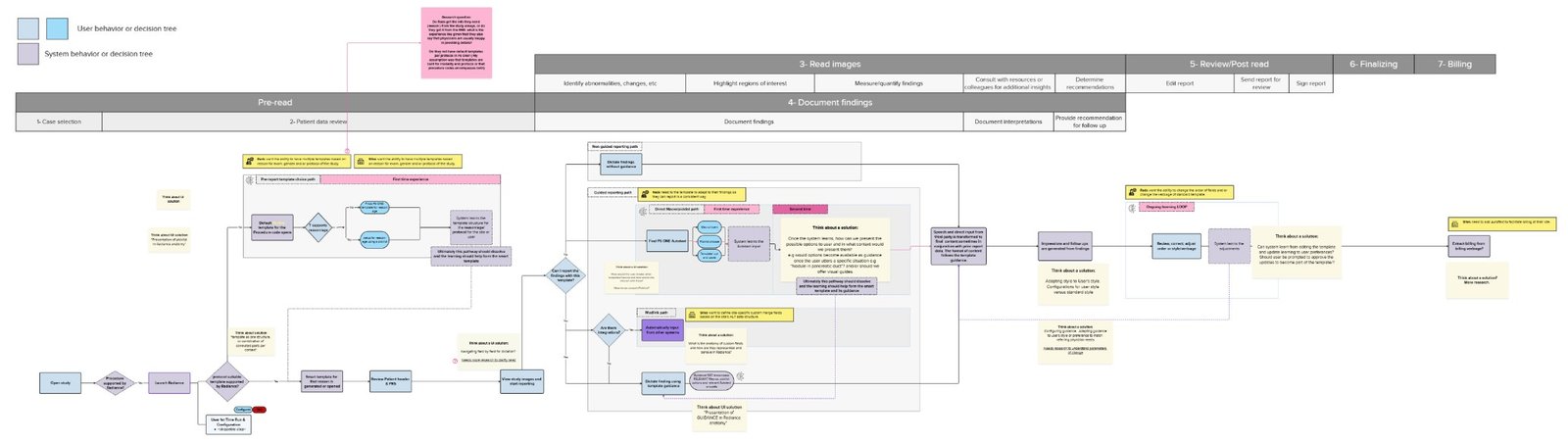
End to End proposed workflow for integrating Smart Templates, grounded in reality of their use
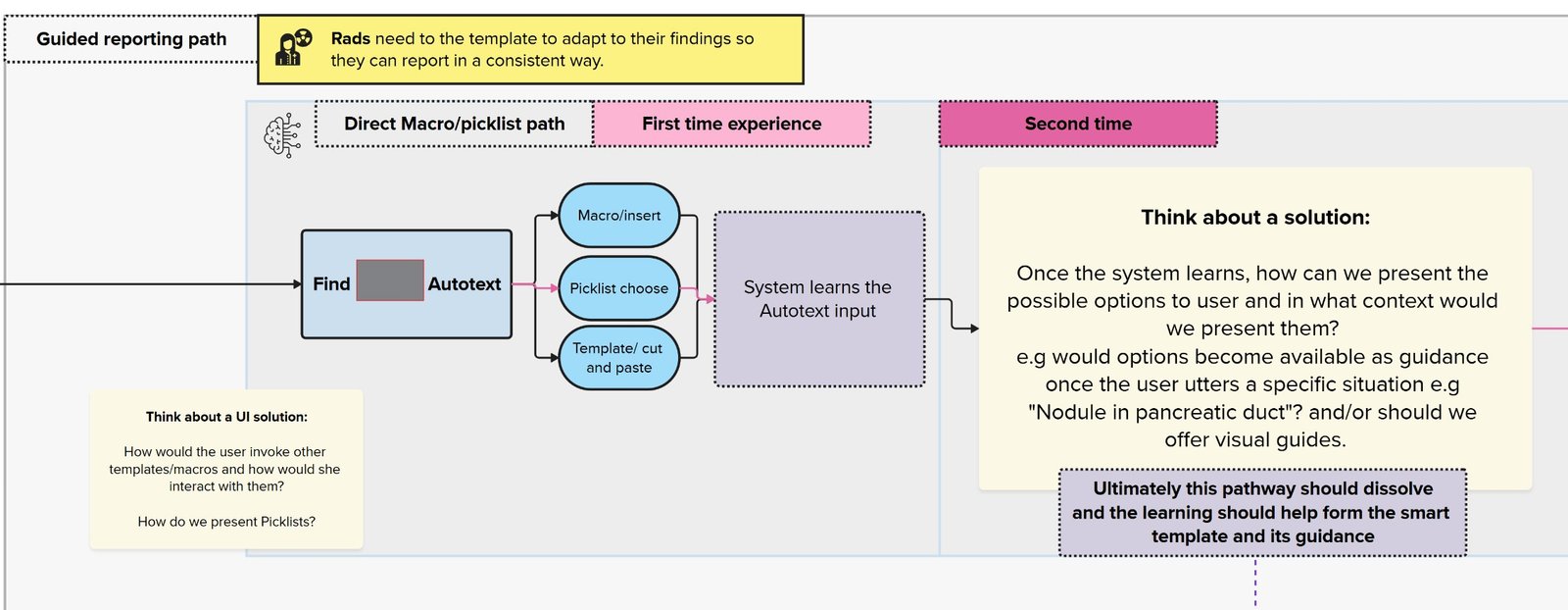
Close up of a section that explores future directions for Guided reporting path
DISCOVERY
Analyzed and compared the first GenAI reporting POC and its roadmap against the existing AutoText experience to identify critical experience and capability gaps the new team was unaware of.
DIRECTION
Synthesized findings into a compelling presentation that reoriented the product team's understanding of clinical template reality, directly informing their research agenda and preventing significant misdirected engineering effort.
VISION
Proposed a long-term vision for AI-driven template generation built on organizational building blocks, where AI detects study context and dynamically composes the right template from the organization's own AutoTexts, Macros, and institutional fragments rather than relying on static one-size-fits-all structures.